Libido changes during the menstrual cycle

Have you ever noticed that your needs and desires change over the course of a month? It’s a natural process resulting from shifts in hormone levels that govern our bodies. In this article, you’ll learn why libido changes throughout the cycle and how cycle tracking, for example with vaginal ovulation thermometers, can help you better understand your body.
Why does libido change over the course of the month?
Libido changes are closely related to the levels of hormones such as estrogen, progesterone, and testosterone, which regulate the menstrual cycle.
Follicular phase (after menstruation, before ovulation):
In this phase, estrogen levels begin to rise. You feel more energetic, more confident, and your libido may start to increase. Hormones prepare the body for ovulation—the moment when the chances of conception are highest.
Ovulation:
This is when libido peaks. High levels of estrogen and testosterone make you feel more attractive and eager for intimacy. It’s the body’s biological response aimed at increasing the chances of fertilization.
Luteal phase (after ovulation):
After ovulation, progesterone levels rise, which can dampen libido. Many women notice less desire for sex, especially in the days before their period, when premenstrual tension (PMS) and lower energy may appear.
Menstruation:
Libido may be low for some women, but for others it increases—everything depends on individual preferences and comfort during this time.
How Can Cycle Tracking Help?
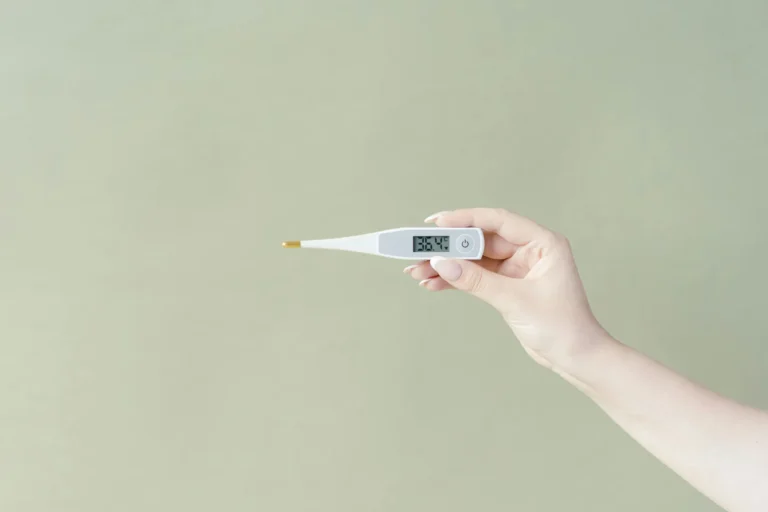
Understanding your cycle is key to better well-being and a more mindful approach to your body. One of the tools that can help you with this is a vaginal ovulation thermometer.
How does the nighttime ovulation thermometer work?
This innovative gadget enables the measurement of basal body temperature (BBT – basal body temperature) while you sleep. It works as follows:
- You apply the thermometer before going to sleep.
- The device automatically measures temperature throughout the night and selects the moment of the lowest temperature, ensuring precise results.
- In the morning, you sync the data with an app that analyzes your cycle and indicates which phase you’re currently in.
Why is it worth using an ovulation thermometer?
- Accuracy: Measuring basal temperature allows you to determine ovulation with high accuracy.
- Body awareness: You’ll get to know your cyclical changes—both physical and emotional.
- Family planning: This tool is invaluable both for women trying to conceive and for those seeking to avoid pregnancy.
- Better understanding of libido: By observing your cycle, you’ll notice how hormone levels affect your desires and needs.
What else can you do?
- Record your observations: You can use mobile apps or a traditional calendar to log changes in mood, energy, and libido.
- Take care of yourself in every phase: Remember that each phase of the cycle is different, so it’s worth adjusting your daily activities to how you feel.
- Listen to your body: If you notice something out of the ordinary—e.g., a prolonged drop in libido or unusual symptoms—consult a doctor.
Libido changes are a natural part of every woman’s life. Tracking your cycle and using innovative tools such as ovulation thermometers can help you get to know your body better and learn to accept it. It’s also a great way to discover how to care for yourself in every phase of the cycle. Remember, your body is your ally—you just need to learn to listen to it!