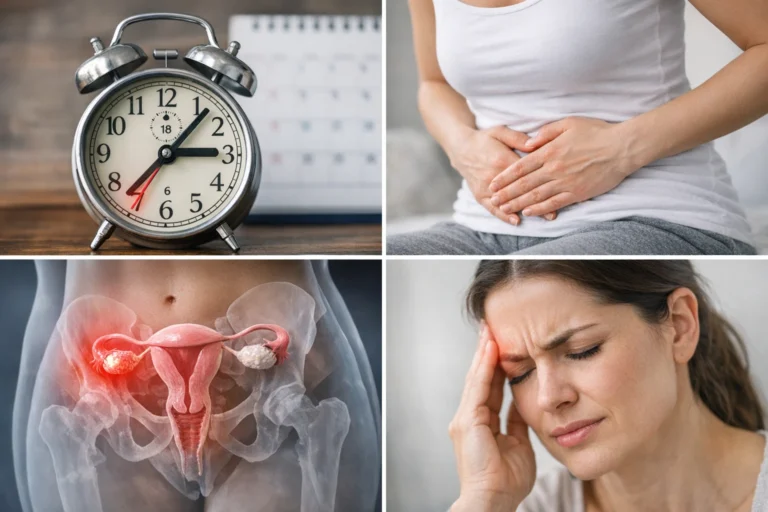
What are anovulatory cycles?

An anovulatory cycle is a menstrual cycle in which ovulation does not occur, meaning a mature egg is not released from the ovary. Despite the lack of ovulation, menstruation (or bleeding) may still occur, which is why many women are unaware their cycle is anovulatory.
Anovulatory cycles are a natural phenomenon that can happen to any woman, especially at certain life stages such as:
- Adolescence – the body is still regulating its hormonal functions.
- Perimenopause – ovarian reserve is depleting.
- Severe stress, illness, or fatigue – external factors affect hormonal balance.
Why do anovulatory cycles occur?
The causes of anovulatory cycles vary and are often related to hormonal imbalances. The most common reasons include:
Hormonal imbalances
- Insufficient luteinizing hormone (LH), which triggers ovulation.
- Estrogen levels that are too low, preventing the Graafian follicle from maturing.
Polycystic ovary syndrome (PCOS)
PCOS is characterized by a hormonal imbalance, which can lead to a lack of ovulation in many cycles.
Thyroid disorders
Both hypothyroidism and hyperthyroidism can disrupt cycle regularity and ovulation.
Stress and lifestyle
Severe stress, lack of sleep, restrictive dieting, or excessive physical activity can disrupt the ovulatory cycle.
How to recognize an anovulatory cycle?
Identifying an anovulatory cycle can be difficult without regular observation of your body. Here are key indicators:
No rise in basal body temperature (BBT)
Ovulation increases progesterone levels, which raises BBT. If the temperature does not rise in the second half of the cycle, it may indicate a lack of ovulation.
Lack of fertile cervical mucus
During fertile days, cervical mucus becomes clear, slippery, and stretchy. The absence of these changes may mean ovulation did not occur.
Irregular periods
Although anovulatory cycles can also occur with regular periods, they are more often associated with irregular bleeding or its absence.
Observations using an ovulation thermometer
Modern ovulation thermometers that monitor BBT and other parameters can help detect anovulatory cycles. With apps that analyze the data, it is easier to identify the lack of characteristic temperature shifts.
Ovulation tests
Ovulation tests detect the presence of LH in urine. The absence of its surge may indicate a lack of ovulation.
How do anovulatory cycles affect fertility?
Anovulatory cycles are one of the main causes of difficulty conceiving, because without ovulation there is no egg available for fertilization. Long-term occurrence of such cycles may signal more serious health issues, such as PCOS or ovarian insufficiency.
What to do in case of anovulatory cycles?
Track your cycle
Regularly monitoring your cycle using an ovulation thermometer, ovulation tests, or mucus observation can help identify the issue.
Consult a doctor
If anovulatory cycles occur frequently, it is worth seeing a gynecologist or endocrinologist. The doctor may recommend hormonal tests, ultrasound, or other diagnostic methods.
Lifestyle changes
Focus on a healthy diet, regular sleep, and stress reduction. These elements are key to hormonal balance.
Pharmacological treatment
In some cases, hormonal treatment is necessary, such as ovulation stimulation or PCOS therapy.
Anovulatory cycles are a phenomenon that can occur in any woman, but their frequent occurrence requires attention. Mindful cycle observation and regular monitoring of fertility indicators, such as temperature or cervical mucus, help you better understand your body. Ovulation thermometers and other modern technologies can be valuable support in recognizing anovulatory cycles and taking appropriate action. Your reproductive health is in your hands—take care of it!