How long does ovulation pain last? Specific numbers, facts, and warning signs
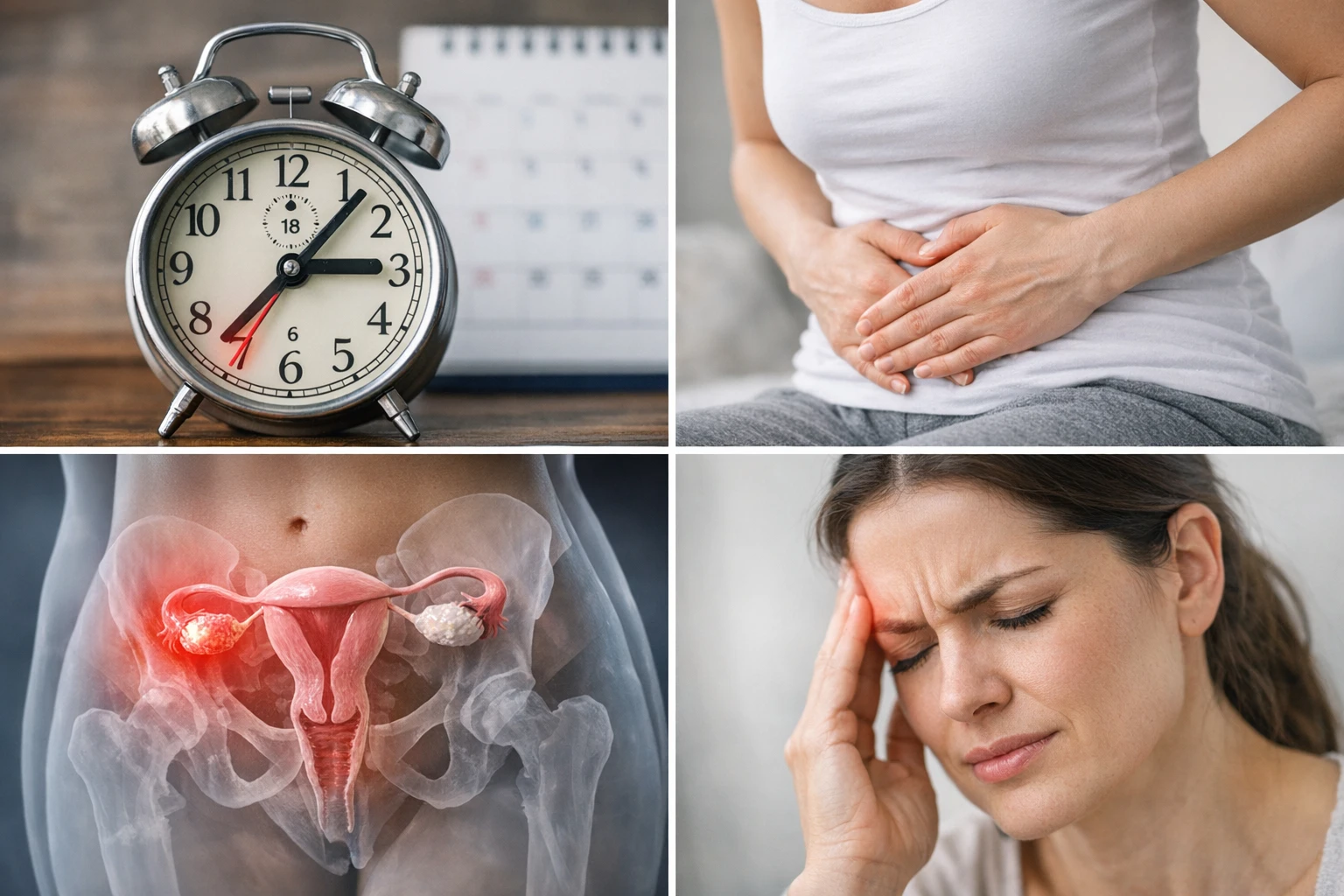
Do you feel a stabbing pain on one side of your lower abdomen and wonder how long ovulation pain lasts and whether it’s still normal? One month it goes away after a few hours, another time it drags on for two or three days. That can be worrying—especially when you’re trying to conceive or simply want to understand your cycle well. Find out how long ovulation pain lasts, when it most often appears, and in which situations it should prompt you to consult a professional. We’ll also show you how to combine observing pain with taking your temperature to get a fuller picture of ovulation.
How long does ovulation pain last – a concrete answer in numbers
Most often, ovulation pain lasts from a few minutes up to a maximum of 48 hours. On average, it’s 1–2 days. And that’s the most concrete answer to the question: how long can ovulation pain last and is it normal. However, not every woman feels ovulation pain—it’s estimated to affect about 20–40% of women.
If you feel lower abdominal twinges for two days—no worries. That still falls within the typical range. If the discomfort lasts three days, that also doesn’t necessarily mean anything is wrong. It’s different when the pain goes on for five days or longer. That’s a rarer scenario. In that case, it’s worth pausing to consider whether any other symptoms are appearing. Is it similar or worse in subsequent cycles?
Intensity matters, too. Ovulation-related discomfort is usually mild to moderate. It’s more of a sensation of stabbing, pulling, sometimes one-sided pressure. Something you can feel—but that shouldn’t take you out of your normal day. However, if the pain is sharp, increasing, hard to bear, or interferes with daily functioning — don’t treat it as “typical ovulation.” In such a situation, it’s good to check whether there’s something more behind the symptoms.
Wondering what the stages of the menstrual cycle look like and when ovulation occurs? See a detailed breakdown of each phase and organize your knowledge.
When does ovulation pain occur in the cycle and what causes it?
Ovulation pain occurs most often between day 12 and 16 of the cycle (for 28–30 day cycles), i.e., around ovulation—usually during or just before the egg is released. Why does it hurt at all? At the moment of ovulation:
- the mature ovarian follicle ruptures,
- the egg is released,
- there may be peritoneal irritation or slight bleeding.
This is the process that causes the characteristic stabbing sensation — usually one-sided, on the side of the ovary releasing the egg. In the next cycle, the pain may appear on the opposite side. Often before the pain you’ll notice:
- more stretchy, transparent cervical mucus,
- increased libido,
- and 1–2 days later — a rise in body temperature of 0.2–0.5°C
A common sequence is observed: pain around ovulation followed by a temperature rise in the days after.
Want to know the most common signs of ovulation and how to tell them apart from PMS? Check out the full guide and learn to recognize your body’s signals step by step.
Ovary pain and temperature – how to confirm it’s really ovulation?
Feeling pain alone doesn’t give full certainty that ovulation has occurred. Lower abdominal discomfort can also appear in anovulatory cycles. That’s why it’s worth combining pain observation with measuring your basal body temperature. After ovulation, temperature:
- rises by 0.2–0.5°C,
- stays elevated until the end of the cycle.
Regardless of the measurement method—morning or automatic at night—the key is to collect data regularly, so that you can see a clear chart. That’s the moment when many women say: “Now everything starts to make sense.”
The ovulation thermometer MY OVU was designed specifically for the precise measurement of BBT. It measures temperature with the accuracy needed to detect even a slight post-ovulation rise.
We know that when you’re trying for a baby or want to understand your body better, it’s not about guessing. It’s about data. If you feel ovarian pain and in the following days you see a clear temperature rise on your chart, that’s a strong indication that ovulation most likely occurred.
This is especially helpful when:
- Your cycles are irregular,
- the pain appears on different days,
- you want to assess whether the cycle was ovulatory.
This combination — symptom + temperature— gives much more than observing pain alone.
Want to be sure you’re interpreting your cycle correctly? Check how to pinpoint your fertile days precisely and use temperature and symptoms in practice. These are concrete tools that help you make informed decisions.
When does ovulation pain stop being “normal”?
In most cases, ovulation pain is a physiological phenomenon. The body reacts to the follicle rupturing, and that’s it. However, there are situations thatshould not be ignored — especially if something clearly differs from what you usually observe in yourself. It’s worth seeing a doctor when:
- the pain lasts longer than 3–5 days,
- the pain is strong and interferes with normal functioning,
- a fever appears,
- nausea or vomiting occur,
- there is unusual, heavy bleeding.
These are no longer typical, mild periovulatory symptoms. Especially if the pain is severe, increasing, or completely different from previous cycles — it’s not worth waiting for it to “go away on its own.” Such symptoms may suggest, among others:
- ovarian cyst,
- endometriosis,
- ectopic pregnancy,
- inflammation of the adnexa.
If you’re starting to wonder whether this still falls within the norm, that’s a sign thatyou need more clarity. In such a situation, it’s best to rely on facts, not just feelings. Observe your cycle. Recordwhen the pain appears and how long it lasts. Measure your body temperature and note its rise after ovulation. This way, during a medical visit you can present concrete data — cycle length, the day the pain occurred, and its duration. This greatly helps assess whether we’re dealing with physiology or something that requires further diagnostics.
Key information at a glance – worth remembering
Ovulation pain, in most cases, isa natural part of the cycle. It can vary induration and intensity, but there are specific ranges considered normal. If you want to quickly organize the most important information, you’ll find the key takeaways below.
- Most often, the pain lasts from a few minutes to 48 hours, typically 1–2 days.
- Symptoms lasting up to 3 days usually still fall within physiological limits.
- Pain lasting 5 days or longer requires closer observation.
- Typical ovulation pain is mild to moderate and should not prevent normal functioning.
- A temperature rise of 0.2–0.5°C after ovulation helps confirm that the egg has been released.
- Severe, increasing pain with additional symptoms (fever, vomiting, heavy bleeding) requires medical consultation.
The most important thing is this: observe your body regularly, not just once. Combining symptoms with temperature measurement gives a much fuller picture of the cycle than intuition alone. The better you know your patterns, the easier it is to notice when something truly deviates from the norm.