Irregular menstrual cycle – what causes it and how to regain control of your cycle?

An irregular menstrual cycle is something many women face—regardless of age. It can appear in teenagers, after childbirth, and may also result from stress or lifestyle changes. The problem begins when periods occur at irregular intervals. This makes it harder to predict upcoming cycles, track ovulation, and understand the signals your body is sending. It can matter both when planning a pregnancy and in everyday health care. Fortunately, in many cases, this chaos can be somewhat organized. Sometimes it’s enough to better understand your cycle and start tracking it regularly. In this guide, we’ll take a closer look. You’ll check the most common causes of an irregular cycle, learn which tests help identify the source of the problem, and discover ways to gradually restore balance to your body. The menstrual cycle is one of the key indicators of a woman’s health—it reflects the functioning of the hormonal, metabolic, and nervous systems.
What does an irregular menstrual cycle mean and when should you pay attention to it?
An irregular menstrual cycle means that periods occur at varying intervals— shorter than 21 days or longer than 35 days. This means an irregular cycle has no steady rhythm, and the length of consecutive cycles can differ significantly. In many cases, women notice that a period may come after 24 days one time and only after 38 days another time.
This may be accompanied by:
- very heavy or very light bleeding,
- spotting between periods,
- fatigue or a decline in overall well-being,
- difficulty identifying fertile days.
It’s worth remembering that single fluctuations in cycle length don’t always indicate a health problem. The body responds to lifestyle changes, travel, or stress. However, concern should be raised when:
- your period doesn’t occur for more than 3 months,
- cycles are consistently very short or very long,
- there is severe pain or very heavy bleeding.
Over time, an irregular cycle can affect fertility, hormonal balance, and overall well-being, which is why monitoring your body is extremely important.
Why the menstrual cycle can be irregular – most common causes
Most often, an irregular menstrual cycle is caused by hormonal imbalances or dysregulation of the hypothalamic–pituitary–ovarian axis. Hormonal disturbances affect follicle maturation in the ovary and the timing of ovulation. In a healthy cycle, hormones play a major role: estrogen, progesterone, LH, and FSH. When their levels start to fluctuate, the entire mechanism can become dysregulated. Ovulation then occurs later than usual. It also happens that it doesn’t occur at all in a given cycle, which directly affects cycle length.
There can be many reasons for this. Often these are factors that—at first glance— don’t seem directly related to the cycle. The most common causes of an irregular cycle include:
- polycystic ovary syndrome (PCOS), which disrupts ovulation,
- thyroid diseases (e.g., hypothyroidism or hyperthyroidism)
- stress and psychological overload affecting hormonal balance,
- overweight or obesity—especially when accompanied by insulin resistance
- underweight and restrictive diets,
- very intense physical exertion,
- shift work or sleep deprivation,
- smoking.
Lifestyle also plays a major role. In some cases, lifestyle changes can influence cycle regularity, but they are not always sufficient. The body responds to many stimuli— metabolic, emotional, and environmental. Therefore, even a temporary imbalance can shift ovulation, which immediately affects cycle length.
For many women, an irregular cycle also appears at specific life stages, for example:
- after the first period,
- after stopping hormonal contraception,
- during periods of severe stress,
- after pregnancy or childbirth.
In such situations, the body simply needs time. Hormones need to stabilize again and return to their natural rhythm. For a few months the cycle may therefore remain irregular—and this doesn’t always mean there’s a health problem. However, it’s worth paying closer attention to your body during this period. A good habit is to note the length of successive cycles and observe changes.
One of the more common causes of cycle disturbances is polycystic ovary syndrome. If you want to better understand this topic, check out the article: PCOS – why ovulation matters. There we explain how this condition affects the course of the cycle and the chances of getting pregnant.
Irregular cycle after childbirth – why does the body need time?
An irregular cycle after childbirth is completely natural. The body goes through many changes after pregnancy—primarily hormonal ones. On top of that comes lactation, which also affects the endocrine system.
After childbirth, the body needs some time for everything to stabilize again. The hormones responsible for ovulation and menstruation have to return to their rhythm. That’s why the first cycles often look different than before pregnancy. They may be longer, or occur at irregular intervals.
Breastfeeding plays a major role .During this time the body produces prolactin— a hormone responsible for milk production. But it has another effect as well. It inhibits ovulation, which is why the return of regular cycles may simply be delayed.
In practice, this means that:
- the first period may not appear until several months after childbirth,
- cycles may be irregular for as long as 3–6 months,
- ovulation may occur earlier than the first period.
And here comes a question many women ask themselves. Is pregnancy even possible during this time? Yes—it is possible. Even with an irregular cycle, ovulation can occur unexpectedly. And if ovulation occurs, fertilization can happen as well.
That’s why during the postpartum period it can help to carefully observe your body and monitor your cycle. Over time, you start to notice various signals your body sends. Step by step, it becomes easier to understand how your body returns to its natural rhythm.
Fertile days with an irregular cycle – why are they so hard to predict?
Fertile days with an irregular cycle are harder to determine. The reason is simple—ovulation doesn’t occur at a fixed point in the cycle. In a regular cycle, it’s much easier. Ovulation usually occurs about 12–16 days before the next period, because the length of the luteal phase is relatively constant. This makes it possible to estimate the fertile window fairly accurately.
With an irregular cycle, it’s different. Ovulation can shift—sometimes by a few days, and sometimes even by more than a dozen. That’s precisely why classic calendar methods often don’t work. You can learn much more simply by observing your body. The body sends various signals:
- changes in body temperature,
- changes in cervical mucus,
- mild ovulation pain,
- changes in mood and libido.
One of the more accurate ways to monitor ovulation is basal body temperature (BBT) tracking. After ovulation, body temperature rises slightly—usually by about 0.2–0.5°C. Such a rise in temperature is an indirect indicator that ovulation has already occurred..
And this is where tools come in that help you observe your cycle more effectively. More and more women are using precise ovulation thermometers such as MY OVU. They are designed specifically for measuring basal body temperature. Thanks to high measurement accuracy, it’s easier to notice the characteristic temperature rise that confirms ovulation has already occurred—even when the menstrual cycle is irregular.
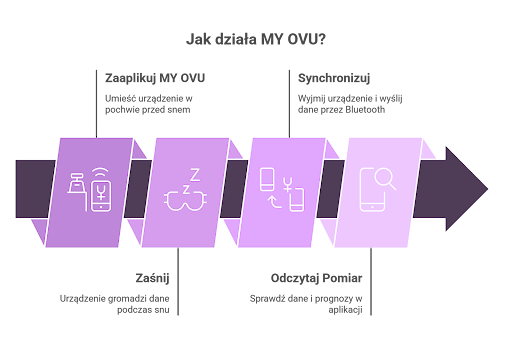
Consistency is key, but it doesn’t have to mean daily manual measurements at the same time. With solutions like MY OVU, temperature is measured automatically during sleep, allowing you to collect plenty of data without having to remember a morning reading.
After some time, your body’s individual temperature pattern becomes visible. Based on this, you can better understand the course of your cycle and notice the temperature rise that indicates ovulation has already occurred.
Regular observation of the data helps you better understand cycle variability and its phases—even if your menstrual cycle isn’t perfectly regular.
If you’re wondering why the second part of the cycle may be too short, also read our article explaining what a short luteal phase is and see how it may affect ovulation and the chances of pregnancy.
Diagnosing an irregular cycle – which tests are worth doing?
If the menstrual cycle remains irregular for a longer time, the doctor usually starts with a thorough medical interview. The questions concern cycle length, accompanying symptoms, lifestyle, and past illnesses. The next step is typically a gynecological exam and imaging diagnostics. Pelvic ultrasound makes it possible to assess the structure of the ovaries and uterus, and to check for cysts characteristic, for example, of polycystic ovary syndrome.
In many cases, laboratory tests are also performed. Their aim is to assess the body’s hormonal balance. Most commonly, the levels of hormones such as the following are analyzed:
- FSH and LH – hormones that regulate ovarian function,
- progesterone – the hormone responsible for the second phase of the cycle,
- estrogens,
- testosterone,
- thyroid hormones.
Sometimes the doctor also orders additional tests to rule out other health issues. This may include, among others, assessing insulin and glucose levels or testing for anemia. Only after gathering all the information is it possible to determine the cause of an irregular cycle, which in turn allows for choosing the right method of treatment or cycle regulation.
How to regulate the menstrual cycle naturally and medically?
Regulating the menstrual cycle often starts with the basics. Sometimes it’s enough to look at your daily habits and introduce a few lifestyle changes. The body responds quite quickly to improvements in diet, sleep, and stress levels. In some situations, however, medical support is needed—especially when the cause is hormonal disorders or illnesses.
If the problem stems from hormonal imbalances, the doctor may suggest appropriate pharmacological treatment. Many women also choose regular cycle tracking in parallel, which helps them better understand their body’s responses. This makes it easier to notice the moment of ovulation, the length of individual cycle phases, and the body’s overall rhythm.