Types of mucus during the menstrual cycle

Cervical mucus is a natural secretion produced by glands in the mucous membrane of the cervix. Its production is linked to the female hormonal balance. The mucus changes throughout the cycle—its volume, consistency, smell, and color vary as a result of progesterone and estrogen levels. The quality of the mucus can also be influenced by:
- lifestyle,
- vaginal hygiene,
- diet,
- medications,
- climate change,
- hormonal contraception,
- stress levels.
In a 24-hour period, the mucous glands produce from 20 to 60 mg of mucus, and during ovulation even up to 600 mg. At that time, the water content in the mucus can be as high as 98%; the remainder includes, among others, calcium, sodium, potassium, glucose, protein, and trace amounts of copper, iron, selenium, and zinc. The composition of the mucus also contains enzymes (e.g., amylase), small amounts of hormones (prostaglandins), and mucin, which gives it viscosity.
What role does mucus play during the menstrual cycle?
Vaginal mucus performs key functions: it moisturizes the vagina, protects against infections, and also helps determine fertile and infertile days. On fertile days, it helps sperm reach the fallopian tube and extends their lifespan. In the case of conception, the mucus forms a mucus plug that prevents amniotic fluid from leaking.
During ovulation, the mucus changes color and consistency. It becomes clear and stretchy, resembling raw egg white. Before menstruation, it becomes thicker and less transparent, which makes it more difficult for sperm to reach the egg cell.

Types of mucus in the different phases of the cycle
The menstrual cycle is divided into three phases:
- Follicular (pre-ovulatory): High estrogen levels make the mucus thin, clear, and stretchy, resembling egg white, which favors sperm.
- Ovulatory (ovulation): Mucus reaches its greatest quantity, is at its most fertile, and the dominant hormone is progesterone.
- Luteal (post-ovulatory): The mucus becomes thick, milky white or creamy yellow, less transparent, which makes it harder for sperm to reach the egg cell.
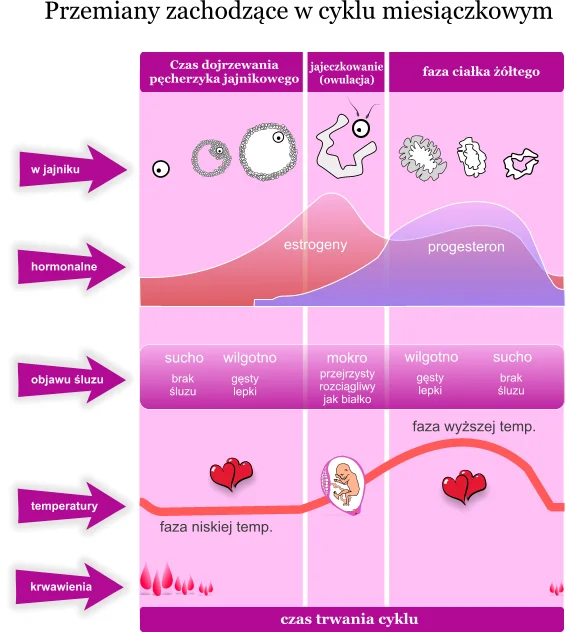
Source: 28dni.pl
Observing mucus during the cycle
Mucus changes throughout the menstrual cycle. Observing these changes helps with family planning and detecting potential health problems. Mucus that is foul-smelling, foamy, yellow-green may indicate an infection and requires consultation with a doctor.
Menstrual cycle and mucus – summary
Changes in the structure of cervical mucus are caused by hormone levels, but also by other factors such as lifestyle and diet. Observing mucus helps with planning pregnancy and diagnosing health problems. Difficulties conceiving can have various causes, so it is worth expanding your knowledge on the subject, for example by using ovulation thermometers and analyzing the luteal phase.