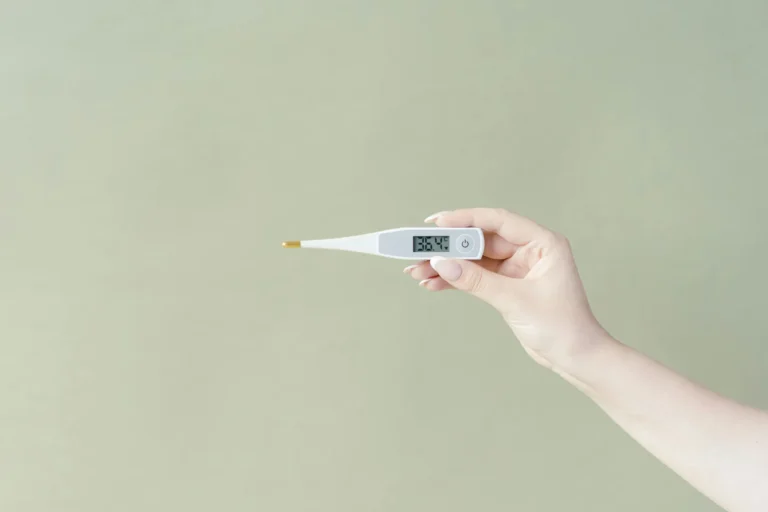
How to measure basal body temperature?

Basal body temperature measurement – how to take it correctly?
Location First, choose one method of measurement, specifically its location. Measuring skin temperature, as we do for example when ill, may be unreliable. It is therefore recommended to place the thermometer under the tongue, in the rectum, or in the vagina—areas that are body cavities lined with mucous membrane.
Time The measurement should be taken every day, at the same time, right after waking up, before getting out of bed, and after a night’s sleep or at least three hours of rest. To obtain a valid result for BBT analysis, this morning discipline must be maintained on weekends as well, even if you want to sleep longer.
Device It’s best to use the same accurate thermometer all the time. There are devices on the market specifically designed for this, offering certain conveniences, e.g., an ovulation thermometer, more specifically a vaginal thermometer.
By recording the results obtained and connecting consecutive points, you can create a useful thermal curve chart. You can do this yourself or use apps that will do it for you.
What if the measurement is taken at a different time? If you wake up an hour later, it doesn’t mean you should skip the measurement or enter the result without adjustment. Half-hour deviations should not significantly affect the result, but longer ones will. If the measurement was taken later than usual, subtract 0.1˚C from the result for each delayed hour. Conversely—if it was taken earlier, add this value for each hour.
Record all circumstances that could have affected the BBT level.
Factors affecting the reliability of ovulation thermometer readings
- Certain medications
- Illness or fever
- Interrupted sleep cycles
- Alcohol
- Travel across time zones
- Climate change
- Gynecological disorders
- Shift work
- Stress
- Poor well-being
- Departures from established habits
- Late-night eating
- Intense physical exertion
The interpretation of these disturbances will depend on their individual impact on a given woman, as one of the factors may affect the measurement result in one person and not in another. It is therefore important to observe your body’s reactions and record all information.
Observing BBT measurements – what temperature on fertile days? Measuring basal body temperature has been used by women for many years to optimize the time when they can have intercourse without other protection, avoiding conception during the fertile period. Many people still use this method in family planning or as a natural method of contraception. Throughout the entire menstrual cycle, many processes take place in a woman’s body.
Body temperature during ovulation One stage of the cycle is ovulation, which causes a sustained rise in BBT of about 0.2–0.6˚C. Monitoring this symptom is therefore one way to estimate when it occurs. A woman’s basal body temperature is between 36.1˚C and 36.4˚C. After ovulation, progesterone levels rise, released by the corpus luteum, which acts on the hypothalamus to increase BBT. As a result, the luteal phase of the menstrual cycle is associated with an increased feeling of warmth and sweating. This state can usually be observed the day after ovulation and lasts for about 72 hours.
What happens during the pre-ovulatory phase? Elevated estrogen levels in the pre-ovulatory phase contribute to a decrease in BBT. If fertilization does not occur, the corpus luteum breaks down, causing a drop in BBT, which coincides with the onset of menstruation. If conception occurs, the corpus luteum continues to function and maintains an elevated BBT during the first trimester of pregnancy, after which it returns to normal.
In observing and analyzing BBT, what matters is not a woman’s absolute temperature, but its change. Because these changes are so small, it is crucial to use a sensitive, consistent device and take measurements at a fixed time. Fluctuations in BBT can result from external factors, so it’s best to set a consistent early-morning measurement time, using the same ovulation thermometer internally.
BBT as a method for informed female fertility Basal body temperature is one element of some fertility awareness–based birth control methods, known as symptothermal methods. By combining the rules of using BBT with tracking other ovulation symptoms, such as cervical mucus, you can estimate the most fertile days of the cycle—the time when a woman has the greatest chance of becoming pregnant.
How to get pregnant? A woman’s fertility is highest about two days before the rise in basal body temperature, but sperm can live in the reproductive tract for up to five days. For fertilization to occur, intercourse can take place several days before ovulation. For example, if over three months of cycle observation and temperature measurements you notice a temperature rise after days 13, 14, and 15 (i.e., after ovulation day), it’s best to have intercourse between cycle days 7 and 16, and especially between days 13 and 15, to increase the chances of getting pregnant.
BBT as a natural method of contraception When using BBT as a natural contraception method, you should avoid intercourse from the beginning of menstruation until about three days after the temperature spike (or use other contraceptive methods during this time, e.g., condoms). These three days are only approximate, because in some women BBT may not show a clear rise until three days after ovulation. In women with irregular periods, predicting the day of the temperature spike is more difficult. In addition, women with short cycles (below 24–25 days) have a high chance of pregnancy if they have unprotected intercourse right after their period or even at its end.
Using this method during intercourse without additional protection does not protect against sexually transmitted infections!
Effectiveness of the method in preventing pregnancy Regarding FAM as a natural contraceptive, the World Health Organization placed fertility awareness methods at the third level of effectiveness. Intrauterine devices ranked second, and combined oral contraceptive pills were considered the most effective.